Monday, 28 September 2009

CAPELLO: PRIVATE OR PUBLIC?

Fabio Capello has been a mostly uncontroversial figure since he took over as manager of the England football team. This is in stark contrast to many of the previous incumbents such as Sven, McClaren and Hoddle. The Italian’s workmanlike approach to the job has won him many fans, although his recent privacy case against the News of the World and Daily Mail has caused a bit of a stir in the media world. He received an apology and “substantial” damages (paid as a donation to charity) from both papers after they printed pictures of him on holiday covered in mud with his wife. The interesting thing about this case is that the Press Complaints Commission told newspapers beforehand that the couple were concerned about the presence of photographers whilst on holiday - so therefore printing the photos was “bad manners”, says Stephen Glover in today’s The Independent. But Glover also makes the valid point that it is not illegal to publish photos of public figures taken in a public place.

There have been various privacy cases that have gone through every court twice in this land - I studied many of them as part of my degree last year - and it’s evident that nobody really knows what the press can get away with. We cannot allow a situation where the British press cannot publish pictures of celebrities and well-known people in public places, as that is not an element at the heart of a free media. Yes, Capello’s privacy request was not respected, but the Press Complaints Commission did not give this out as a legally-binding precedent. If he is on holiday, then there is a reasonable expectation of privacy from paparazzi snappers, but the nature of being a football manager is that there are hundreds of thousands of people who want to know about everything you’re doing. Luis Felipe Scolari was quite open about how one of the reasons he didn’t take up the England managerial position was because of the way in which the British media operates - and that his privacy would have been intruded upon. But now Capello is in the hotseat, and is doing a very good job, people want to know about everything he is doing. It’s no surprise and the price of stardom is that the media will follow him everywhere he goes in public. In my opinion, they shouldn’t be stopped from doing this.

* * *

Nominations for The Guardian Student Media Awards 2009 were released today, and I’m pleased to say the paper on which I was News Editor last year has been shortlisted for Newspaper of the Year. Forge Press at the University of Sheffield has had a very successful first year in its new, rebranded form - and it’s exciting what the future holds. There is stiff competition this year in the Newspaper category - the other four finalists being Leeds, Cardiff, York and Imperial - and it’s no surprise that the former two are the only other established universities with Sheffield that run undergraduate journalism courses. Last year’s editor on Forge Press, Ciaran Jones, did a formidably good job in running the show in Sheffield - and I had a great time putting together the news section with fellow Journalism Studies student, Robert Golledge.

Getting involved with the university newspaper is one of the best things I’ve done in Sheffield - it’s a very well-run operation which has taught me many skills that I’m sure will come in handy in the future. You get to meet important people in and around the university, work against deadlines and learn how to organise a team of around 50 journalists. With a circulation of 15,000 it was a big responsibility - and I’m pleased to still be writing content for the paper this year; just not from an editorial position. I’ll also give a special mention to Paul Garbett - another one of my coursemates - who has got his second successive Guardian nomination this year. Well done to him. If you’re at university, or soon to be heading there, try and get involved with student media as it’s a super way to find your feet in journalism.

* * *

I never really realised there was a north/south divide until I came to study in Sheffield. Then I met some people from the north and realised that - even in an often-jokey way - they didn’t really like southerners. Everyone’s favourite football chairman, Ken Bates (Leeds United), thought it would be helpful to add to the debate last week. He said: “Yorkshire people like their own. They don’t like southerners.” Well, that’s wonderful, isn’t it. Leeds United - the club where ‘everyone hates us but we don’t care’ - are not exactly trying their best to make friends, are they? There’s the old ‘dirty northern b******s’ chant directed at clubs north of Watford at southern grounds, but most fans are more concerned about their local rivals - not any old team in a different section of the country.

I don’t think a north/south divide really exists in football as much as it does in other areas of life like housing and finance - in fact, the north-west is this year’s powerhouse for the Premier League (representing 12 of 20 sides if you include the west Midlands). So Mr Bates’ comments were not really called for - even though he was only referencing manager Simon Grayson’s local roots. Why stoke an argument that doesn’t even exist? The old ‘waving the five pound note’ and ‘we pay your benefits’ chants are not directed by Southend fans to most northern teams - it’s usually to the likes of Milwall and Leyton Orient to wind up local rivals. So maybe Mr Bates could think again before generalising the whole of Yorkshire in a single statement. I’m sure there are some people in Sheffield and Leeds who don’t mind the fact I come from Essex!

Monday, 21 September 2009

SHEFFIELD: A MUSICAL MASTERPIECE

Music is a wonderful thing that brings people together, triggers personal emotions or memories and is very good at providing a soundtrack to life. It’s interesting how much impact location has had on some of our best songwriters in this country - and one city of note here is Sheffield. From the Arctic Monkeys [pictured] (“You’re not from New York City, you’re from Rotherham”) to Richard Hawley (“Cold city lights glowing”), the Steel City has been the inspiration for a wide variety of music. I love listening to songs in cities where they started life, such as being on the Tube with The Streets on in my headphones (“my Underground train runs from Mile End to Ealing”) or even The Apprentice soundtrack when in Canary Wharf! It’s great to get a feel of their background and influences.

There is a great mini-feature by Dave Simpson in The Guardian today about music in Sheffield - although he begins by saying: “a city peppered with architectural horrors [is] not an obvious place to write a song about”. This made me think that one of the reasons why we have an exceptionally diverse music scene in this country is because the landscapes and buildings of different areas have different impacts on musicians - no UK city is the same. Another good example of this is the rapper and saxophonist Soweto Kinch, whose album B19: Tales of the Tower Block charted the lives of budding musicians in Birmingham who felt they could not escape from their council flat. Such a wonderfully diverse country gives many musicians an great inspiration for song-writing - and it’s great that Sheffield is a good example of this. From the old steelworks to football grounds, and Park Hill Flats to Broomhill mansions, it's a very useful source of lyrics.

* * *

It’s not often that Facebook is blamed for suicide, but that’s exactly what happened after a tragic case recently. The parents of one schoolgirl have said social networking sites place “huge pressures” on young people. Their 15-year-old daughter, Holly Grogan [pictured in The Times], fell 30ft to her death from a bridge in Gloucestershire last Wednesday. Reports suggest she was consistently bullied on her Facebook wall, and this was a major factor in the girl’s decision to end her life. There is no doubt that Facebook has dramatically changed the way that students and young people interact, as it is a central communication hub that is an incredibly useful tool. But the downside is that if you’re unpopular within certain circles nowadays, you can never escape from bullying online.

A few decades ago, before other technologies such as texting and instant messaging became widespread, if you were being bullied at school your home was a safe refuge. But now it will follow you everywhere - and it seems the shame of being bullied online may have led Holly to take her own life. I don’t think I have ever seen serious bullying on Facebook, but maybe that’s because the majority of my friends are of a university age where this is less widespread anyway than at school. However, the concept of out-of-hours bullying is something that needs to be addressed by the government to avoid more tragic cases like this. My suggestion would be that Facebook - at least in this country - should make it easier for children to say confidentially if they are being bullied online, and then for parents and Facebook to work with schools to eradicate this. It may seem a idea too large to implement, but then again very few people predicted Facebook would ever reach the size it has now become. If the government see online bullying as a serious enough problem, then they will spend the necessary money to reduce - if not, eradicate - it.

* * *

Google is one of those things which almost everyone loves, but at the same time is a little scared of due to its all-encompassing size. Matt Brittin, UK Head of Google, says: “We want to help newspaper publishers but we are a technology partner”. A quarter of their revenues last year went back to people whose websites they are “helping to monitise”, according to Brittin. So even though Google have become incredibly big in just over 10 years, it has also created lots of revenue for media organisations by making it easier to find content. Everyone is well aware that newspapers are looking at alternative ways of making money online, and it’s not Google’s fault that few are yet charging for online content.

The problem comes when claims are made that the corporation is making money out of somebody else’s time and effort. But Google News is an exceptionally useful tool, and I often find exactly what I need by using it’s sophisticated search engine which covers around 25,000 sources. In fact, I probably only look at some newspaper websites - especially local - because Google has picked them up. Trinity Mirror chief executive Sly Bailey doesn’t particularly like Google News - claiming it’s making easy money out of other people’s hard work - but just think for one moment, where would the internet be without Google? Surely in a worse place.

* * *

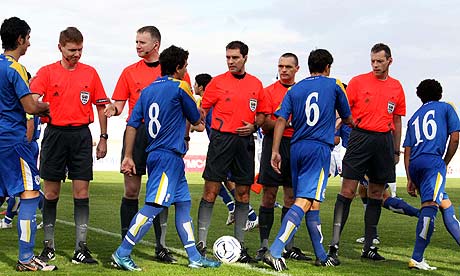
Did anyone watch either Europa League match last Thursday involving Everton or Fulham? For the first time in a match involving professional English sides, there were six officials. Yes, SIX [pictured in The Guardian]. One referee, two linesmen on the wide touchlines, two more linesmen on the end touchline, and a fourth official (or should that be sixth). There was probably a seventh somewhere as well as a backup. How many people do you need to make a decision in a football match?!

This just seems to be another ill-fated experiment by UEFA instead of simply introducing video technology. These new referees are supposed to tell if the ball has crossed the line, but those sort of marginal incidents probably happen every once every ten games or so - and does that really need the investment of another two officials in every game? I think not. Video replays can confirm decisions for certain and should be a much cheaper investment in the long-term anyway. UEFA are just prolonging the inevitable, but until then at least managers have still got something to moan about to journalists.

Monday, 14 September 2009

WOMEN: THE TORIES' SECRET WEAPON

It’s been claimed that if women were never given the vote, there would have been a continuous Labour government since 1945. The Independent ran a very interesting feature today about the importance of female voters to both major political parties in the UK, claiming that Labour are fast losing female support to the Conservative Party. The major reason for this is that women appear to prefer the Tories’ approach to public services.

Different groups of voters are regularly studied by parties as they give a good indication of which policies will go down well and how to structure a marketing campaign. However it’s interesting that such a clear cut gender group - as opposed to maybe trade unionists or NHS employees - are shifting towards one party. It will be interesting to see if this will make the Tories look at launching new policies with a more feminist angle than before.

However this will of course run the risk of upsetting the men. It’s a hard decision to make, certainly, but maybe the infamous ‘Get out and vote. Or they get in’ Labour poster showing Hague with Thatcher’s hair should be revived by the Tories for Cameron - to give him a female touch? Or maybe I’m stretching this a little too far now...

* * *

The government’s proposed lifting of the product placement ban in television is great news for the industry. I firmly believe that during a recession we should be finding as many ways as possible for TV channels to make money through alternative forms of advertising, so it makes life a little more comfortable for their balance sheets. For example, the concept of serving a ‘pint of Strongbow’, rather than a ‘pint of cider’, in Coronation Street does not seem far-fetched and will hardly detract from the main storyline. It would also be reasonable to see the use of a Nokia mobile phone in an ITV drama, which may well be present in a film at the cinema anyway. Even more importantly, it gives the commercial competitors to the BBC a useful funding stream, to which the public body has no access.

There are concerns that it could be abused and over-used in certain programmes, but estimates have suggested product placement could be worth £100m a year to the TV industry, and that is something worth fighting for. Whilst there are concerns about the very future of ITV and Channel Five (owned by German firm RTL), this could just be the catalyst required to help them turn a corner and free up financial resources to concentrate on making new television or importing better shows. But broadcast watchdog Voice of the Listener & Viewer have condemned the idea, suggesting that nobody will know “whether the programme makers are in control or the marketing director”. This is a valid point. However, it is likely that the ban will not be lifted without a variety of restrictions and red tape, and as long as broadcasters are accountable to their viewers (maybe by listing any sponsors at the end of the show), I can only see this being a good development for the maintenance of British television.

* * *

I can’t say I expected such a good start from the Toon Army. Newcastle United were a sinking ship before this season got underway and I’m absolutely amazed that they have won five games in a row - without conceding - and now sit top of the league. Yes, I know it’s only the Championship, but you can only beat what is put in front of you. Chris Hughton is doing a remarkable job, and has set a new club record of straight wins and clean sheets, so fully deserves the Manager of the Month award. He may well be the first caretaker coach to have ever won it (although if you know otherwise, I stand corrected)! I have seen the Magpies twice this season - at Leyton Orient (lost 6-1) and Crystal Palace (won 2-0) - and the contrast could not have been more different between the two games. It seemed like the Toon Army were destined for another relegation season, but they have turned it around.

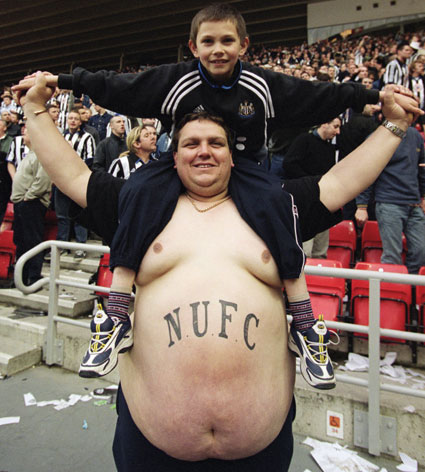
Why is it so hard to predict the future of Newcastle United Football Club? I’ve supported them for over 12 years and must say it’s been interesting over that time, if nothing else. This season’s group of players are certainly a committed bunch, exemplified at Cardiff on Sunday when Alan Smith took down Jay Bothroyd, knowing he would get sent-off - but he did it for the team. Every player out there at the moment wants to get Newcastle back into the Premier League, and it’s pleasing that they might just do it. I know we’re only six games in but the signs are good. Blackpool away on Wednesday evening will be a culture shock for the players and fans, but it will be those sorts of tests which will make them a stronger side should they get promotion. It will be cold and probably raining on the open away stand - but you can guarantee there will be an obese Geordie with his NUFC-inscribed belly hanging out for all to see. That makes me proud.

Monday, 7 September 2009

'MOTORMOUTH' MAKES IT TO 2,073

Chris Moyles today celebrated the impressive milestone of becoming BBC Radio 1’s longest-serving breakfast DJ - overtaking Tony Blackburn by hitting a figure of 2,073 days. I will declare myself as an avid listener of radio and regular listener of Radio 1. But not Moyles. The fact that he supports Leeds United is not a good start, but I’ve never liked his laddish approach to presenting. I can appreciate that he has a massive following and is well-liked amongst his listeners, but there are many radio stations out there that go much better with my morning commute. I personally listen to Jane Jones and Simon Bates on Classic FM as it’s calming and non-threatening radio when I’ve recently woken up. However I do listen to Zane Lowe in the evenings, and occasionally Jo Whiley during the day, as they are two DJs with such a genuine love for music - and don’t shout down the microphone for three hours. The style of the show is just not how I imagine good radio to sound.

Moyles, often labelled 'motormouth' by the tabloids, is an intelligent broadcaster and has built up his own brand - but so much speech without music is not good for me early in the morning! My three favourite radio stations are BBC 1Xtra, Classic FM and BBC R1 - but it’s a good thing that we have so much choice on DAB nowadays as I never have to listen to Moyles. A good DJ is “bright, intelligent and articulate”, according to Richard Park, Global Radio’s director of programmes, in today’s The Independent. I’m not sure that Moyles quite fits this mould, although you cannot deny he is “intelligent” in finding a broadcasting style that many people love. I absolute agree with Park, but I suppose somebody like Moyles is never going to be everybody’s cup of tea - he certainly isn’t mine. However the beauty of radio in this country is that we have such a great choice that we will always find something we like. So well done to Moyles on a terrific milestone, but I won’t be tuning in myself any time soon...

* * *

I spent last Wednesday at The Guardian on an Insight Into Journalism day and had a very interesting time. A group of around 25 ‘budding journalists’ received talks from real journalists and section editors, and then got the chance to design a newspaper page later in the day. Hats off to the editor-in-chief, Alan Rusbridger, who gave up 30 minutes of his time to talk to us and answer questions on getting into journalism. One point worthy of note that he was originally sceptical of Twitter but was won over by its ability to promote crowdsourcing - and it’s now a major part of what The Guardian does. I was rather worried when he said: “There has never been a more insecure moment to have been thinking about taking this career”, but I suppose this is what everyone is saying at the moment and only goes to show that the most determined will succeed!

I was fully expecting the majority of editors and journalists at the day to say they went to university, took a journalism qualification, started on a local paper and then worked their way up to The Guardian. But no! G2 features writer John Crace started off as an ice-cream seller and after deciding on a career-change he successfully pitched a feature to the Sunday Independent which led to more offers from other papers. However I was pleased that others such as Weekend deputy editor, Kira Cochrane, took a journalism course and the head of politics, Will Woodward, worked his way up on local newspapers. That seems a bit more sensible, although I suppose a graduate internship at Mr Whippy is always a possibility.

A sensitive industry issue at the moment is that of newspaper pricing. I walked into the newsagent this morning and handed over a £1.00 for The Guardian, waiting for my change. But it never happened! The price of the paper has increased by 10 pence, and whilst this may seem like an irrelevant increase, it makes it more expensive than The Times and Daily Telegraph - whilst on a par with The Independent. They tried to soften the blow with a free ‘History of the Second World War’ booklet, but to be honest that wouldn’t really interest me anyway. Nevertheless, I’ll leave the last word to Environment editor John Vidal. He said at the Insight Into Journalism day: “Good journalism comes at the expense of time and money.” If that requires me to pay an extra 10p per copy, so be it.

* * *

This week is a big week for England. They can get World Cup qualification wrapped up by beating Croatia on Wednesday, and who would bet against them after seven straight group wins under Fabio Capello? I watched the Senior squad for the first time ever on Saturday, and whilst I was not overly impressed by what I saw, friendlies don’t always tell the whole story. Look at Leyton Orient 6 Newcastle United 1 - one side is now top of the Championship and the other is level on points with the relegation zone in League One after getting beaten 3-0 by Southend United last Friday. England are certainly a side high on confidence, and if Capello does the right thing by starting Jermain Defoe on Wednesday, that elusive eighth win will almost certainly come. Football is very much a game based on confidence and momentum, and I have every confidence that Capello is instilling a great winning mentality and belief in our national side.

Anyway, I didn’t go to Saturday’s friendly against Slovenia as a normal punter. It’s not every day that you get offered a VIP ticket for an England game, so when I was quoted only £100 by a friend, I snapped it up straight away. I’ve probably been to around 200-250 football games in my life, but never attended corporately. Club Wembley is an amazing experience - the meal was the best I’ve ever had anywhere, no doubt about it - and I could see the attraction of taking out your clients there. But all things considered, if I was supporting my team then I’d rather be there with the real fans, singing the real songs and smelling the real greasy burgers. This corporate business is good fun, but it’s not real football - it’s entertainment for the fat cats!

PICTURES: BBC Radio 1, The Guardian, Daily Mail

Monday, 31 August 2009

PRODIGY STEAL THE SHOW AT READING

BBC DJ Steve Lamacq described Florence and the Machine’s performance at Reading Festival 2009 as a “life-changing” moment. To be fair, any artist that climbs up the lighting scaffolding unaided in a tent in front of thousands of people deserves a bit of praise, but she certainly wasn’t alone in putting on a good show. The headliners were Kings of Leon, Arctic Monkeys and Radiohead - an excellent trio who were supported by a diverse group of artists such as Jack Penate, Deadmau5, Delphic and Little Boots. I found some great new bands I’ve never heard of before - and also saw some shockers - but had an absolutely great weekend. So I thought I’d tell you all about it...

I got to see 23 bands in three days with a group of five other friends, and it’s difficult to pick out the major highlights as there were so many! But The Prodigy were most certainly the best. Their fast-paced dance and drum ‘n’ bass rhythms were a massive hit for the crowd, who absolutely lapped it up. It was surprising that a band of their style were the fans’ favourite at Reading, considering it’s primarily a rock festival, but I suppose this shows how much of a broad appeal they have. My particular highlight was Warriors’ Dance, from the new album Invaders Must Die, which is such a beautifully powerful and menacing song. So well done to The Prodigy - nevertheless, by the end I think most people were so worn out by the intensity of it all that Arctic Monkeys (who were on next) were a bit of a come-down. Although the Sheffield lads were on top form, they also weren’t helped by the fact that many of their songs were from the new album which few people have heard yet. But regardless of this, I enjoyed their set and pretty much everyone else seemed to as well.

The first thing that anybody said to me upon my arrival in Berkshire was “Hey, you - fancy a f***?”, which - as you can imagine - I was rather surprised by, as that’s not the sort of thing one is usually asked (considering the last four years I’ve attended a Christian festival, Soul Survivor, in the summer)! In fact, this was very much the theme for a group of 17-year-olds in the tent next door to me whose hormones were in full flow. I got just two hours sleep on the last night thanks to their late and loud discussions about what they’d love to do to each other. I suppose it’s their first time away from parents and they were at the experimental stage, but what’s the point in paying almost £200 to get in and then spending all of your time drinking, taking drugs and sleeping with each other? And keeping me awake? I saw over 20 bands so I’d like to say I spent my time more wisely and got my money’s worth!

The weekend would not have been complete without a near-death experience, and sure enough it arrived on Sunday evening. I had just been standing up for Vampire Weekend and the Yeah Yeah Yeahs, in order to get nearer the front for Bloc Party with two friends. We made it to within five rows of the barriers and I was very happy with that. Bloc Party are probably my second favourite band behind Coldplay, and I’m seeing them twice in six weeks - next up, Sheffield in October - so I wanted to enjoy it. However the crowd started to surge as soon as Kele and the band kicked-off, and I immediately realised this was going to be a rough ride! I ended up on the floor after being pushed and falling during the second song - as did my two friends - but we managed to get up safely after that. I suggested that we could move back but we decided to stay forward together. Big mistake.

The moments that followed were a bit of a blur now, but from the best of my memory, all three of us ended up on the floor again with about five people on top of us who couldn’t get up. Cue lots of screaming ‘help!’, two people standing on my leg which felt like it was going to break, losing my shoe then finding it again in the melee, both of my friends getting squashed, and for about five or ten seconds it was pretty desperate. But eventually we all got pulled up and got ourselves out of the front as soon as possible. I suppose you play the game if you go up to the front, and nobody is likely to be deliberately trying to hurt you when there’s a crowd surge. It was even more intense than The Prodigy - and that was pretty mental as well. However I was relieved to get out of there without losing anything - including my friends!

Afterwards of course we had a good laugh about it, and everyone there seemed to enjoy the weekend as much as I did. Music is one of my major passions - whether it be watching a rock band in concert, singing in church or playing my saxophone - so I loved spending three full days watching brilliant bands and artists across the board. The great thing about music festivals is that (almost) everyone is there to enjoy music - and I was delighted to share that with a great group of friends. Highly recommended! Just don’t start me talking about the toilets...

PICTURES: Andy Whitton (NME), The Music FM, The Online Ticket Exchange, The Guardian.

Monday, 24 August 2009

ANOTHER (LONDON) ONE BITES THE DUST

The Observer = dying. The Independent = dying. thelondonpaper = dead (almost). News International announced last week that the end is nigh for the popular London freesheet, which has a circulation of over 500,000. Unfortunately it was making a loss and was no longer sustainable. The positives from this are a) less litter on the tube, and b) Murdoch failed in his bid to emulate Metro in the evenings - so maybe he isn’t as superhuman as we once thought. He’s still a top newspaper entrepreneur, no doubt about it, but the London free market never brought the dividends he expected. It’s always been a bizarre situation with the Evening Standard and London Lite competing against each other - despite being owned by the same company until an unlikely Russian got in on the act last year.

But despite the fall of any newspaper normally being no cause for celebration, I’m actually quite pleased with this news. The market situation of having two competing freesheets was never a good idea, and it would have worked much better had they merged. But Murdoch would never stoop as low as to join forces with Associated Newspapers, so it was always going to be survival of the fittest. Goodness only knows what will happen to London Lite, although I’ve always preferred it anyway as it’s the only one with a daily Southend United news section! But for advertisers, they will probably be pleased one paper has fallen, as they can still reach those same commuters - an elusive ABC1 group - by promoting themselves in just the London Lite. Most people read both newspapers if they read either, so it’s important to not get too pessimistic about the fall of thelondonpaper... keep smiling :)

* * *

Many congratulations to Dan Antopolski, the comic who won the ‘Dave Award for the Funniest Joke of the Fringe’ in Edinburgh, after winning 18% of the vote. Here we go: “Hedgehogs? Why can’t they just share the hedge?” Funny? Well I’m sure I could do better, but then again I’m unfortunately infamous amongst some of my friends for awful puns. Monty Python once wrote a sketch about a joke being so funny that it killed anyone who saw it - and whilst this was a very good sketch, I’m not sure mine will ever reach those heights. In fact, I sincerely hope not. However one of my favourites over the years was when I was at a Lapland UK attraction with my younger cousins and a girl dressed up as an elf accidentally bumped into a small child. I noted: ‘Hey, that’s surely an ‘elf and safety risk’.

* * *

I’ve got a good reason for why you should have paid more attention in French lessons at school. A British tourist in her early 30s spent the whole night in an Alsace town hall recently after she mistook the ‘Hotel de Ville’ sign to literally mean it was a real ‘hotel’. Whoops. She got locked inside after going to the toilet and could not get out until the morning when someone noticed a sign she had put on the door, saying: “Je suis fermer ici. Est ce possible la porte en ouvrir?” The local mayor said they would place English and German translations of the ‘Hotel de Ville’ sign on the front door. Probably a good idea, but I can’t imagine that many people would make the same mistake...

* * *

I can honestly say that I don’t really like cricket. I just cannot stand watching it - although I’m obviously very pleased that we’ve won the Ashes because Englishmen have shown they can win a sport we invented. So that’s great, but the less said about it the better. Onto more important and interesting things like...um...football. I’ve already got to 10 games this season since July - two Newcastle and eight Southend matches - and have really enjoyed myself so far. But despite my attendance at Newcastle’s superb win over Crystal Palace on Saturday, it’s Southend I want to focus on now.

According to my (reliable) sources, the Shrimpers hold the Football League record for the fewest draws in a season. I know, how exciting. It was three - a record set earlier in this decade. Well we’ve already failed to get anywhere near it this season after drawing our opening four games in a row. The Blues just can’t seem to win in the league, but at least they are hard to beat. Four draws has only been matched by Blackpool in the three divisions as yet, so it must be something to do with the sea breeze... but hopefully Steve Tilson will have a better excuse than that after we get trounced by Hull City tomorrow night.

NEXT WEEK - Reading Festival 2009: My Review

Monday, 17 August 2009

EXAMS AIN'T WHAT THEY USED TO BE

I remember opening my GCSE and A-Level results very well. I was so concerned about the whole thing that I just couldn’t go into school to pick them up and decided to open the letter in the privacy of my own home. They all came out alright in the end and got me into university without any problems, but the annual ‘dumbing-down exams’ debate has come round again just at the time when everyone is panicking over whether they will get the right grades. I suppose it’s topical, but shouldn’t we be celebrating excellent exam standards rather than criticising students every year? Nevertheless, maybe these critics have got a point.

Now, I must explain that I saw a question in a Maths A-Level that you’ll enjoy hearing about. It was a box-plot and whisker diagram question on the subject of orchestral musical instrument weights, and there was an upper outlier. The question was: “Suggest an instrument for this value.” Ummm, a ‘harp’? That’s what I went for - although this question stumped the most intelligent brains in the class, and I found it quite funny that my knowledge of classical music had come in more handy than any quadratic equation from the past - in a maths exam! My friend who got 100% in almost every maths paper wrote down a ‘cello’, which may well have got him a mark, but I doubt it. OK, so the ‘dumbing down’ evidence is out of the way.

However I’m still a bit disappointed with the Metro newspaper this morning saying A-Levels are so easy that ‘even monkeys’ could be trained to take them, according to a teacher survey. Now come on, that’s just silly. It is true that students are finding out more and more about qualifications before they take them, so they are better prepared, and this has problems. If you’re taught the syllabus and sample questions, you’ll remember it for the exam and then forget it all soon after.

That’s exactly what happened for me in A-Level maths. I got 96% but would struggle to get an ‘E’ if I was to sit any of those papers now. But whilst the preparation for exams is better, that doesn’t necessarily mean that they’re easier - and we should be thinking more about congratulating students than criticising their achievements. If pass rates fall, we’ll be slamming the education system. If they rise, we’ll be saying it’s easier. But either way, there will always be a picture of two of the most beautiful blonde girls the papers can find posing outside a college clutching their pieces of paper. That’s a certainty.

* * *

Well done to the Daily Star, Daily Star Sunday and The Sunday Times - the only three national newspapers to be recording a circulation rise during the recession, based on last year. Richard Desmond’s Star titles went up by 15% and 1% respectively, whilst Rupert Murdoch’s Sunday Times was up 2%. I like to highlight the positives here, as every other national daily and Sunday has seen its circulation fall over the last 12 months. The reason for the Star to be doing so well can primarily be put down to the price decrease (it now costs 20p Monday to Friday), but also to the fact it is being brought more upmarket by the editor, with less naughty pictures of women on the front-cover and more proper Sun/Mirror-type tabloid stories. The Daily Star Sunday has been doing quite well for a few years, since it started giving away free DVDs - although The Sunday Times seems to be selling itself on good quality journalism for the moment, which is encouraging.

On the other hand, you’ve got papers like The Independent (down 17%) and on Sunday (down 22%) which could well be out of business in the near future if they show no sign of improvement. However, for The Independent, this figure must be realised in the context that their cover price went up from 80p to £1 over this period. So in terms of revenue from newspaper sales they won’t have suffered that badly - and the Daily Star will be losing revenue but gaining ground on competitors. In the long run, that might just be more important. It’s good to see the Star doing so well, as although it’s far from my paper of choice, it is a British newspaper. And if somebody’s doing well, then there’s still hope for everyone else!

* * *

It’s shaping up to be a fascinating season in the Football League after the second matchday of the season, with Coventry City being the only Championship side to have registered two wins so far. It’s been a solid start for Sheffield United and Newcastle United (I’m extremely surprised at the latter!), but these are just two sides who could have a good campaign. The league is so open this year that anybody could go up, and it will be consistency and strength-in-depth that will secure promotion in my eyes. An outside bet for the top six could still be one of last season’s League One sides - such as Leicester City or Peterborough - but there’s plenty of twists and turns still to go.

I hope my prediction of 16th for the Toon will be proven wrong by Shola Ameobi (since when was he capable of scoring three goals in a season, let alone a game?) but am not getting carried away just yet. There are plenty of good players who could still leave the Magpies before the end of August, and we could still be left with youth-teamers filling up the numbers. But hopefully not. I’m off to Crystal Palace this weekend to see the Magpies in action, and am sincerely hoping that it turns out slightly better than their last visit to London - a 6-1 defeat which I witnessed - in E10. If we ever play Leyton Orient again, I think I’ll be hiding underneath the covers...