Monday, 21 December 2009

PRAYING FOR PUPILS: RIGHT OR WRONG?

Maths supply teacher Olive Jones has been suspended after offering to pray for a sick pupil. We've heard a few stories of 'persecuted' Christians recently, such as Caroline Petrie, the carer who offered to pray for her patient. I felt compelled to write something about the link between faith and work after reading about Olive [pictured]. Firstly, well done to both women for talking about this so openly in the media and making sure everyone is aware of the problem. Divine healing is an exceptionally complex issue as it cannot ever be proven in stone, but this is irrelevant really - many people believe God heals and that Christian belief should be respected by all.

I think the main issue here is that a Christian has been suspended for offering to practicise their beliefs in the workplace. Maybe Olive should have prayed for the child on her own without telling them? But she didn't actually pray for them anyway - as far as we know - because the mother said they were not believers. So has she actually done anything wrong? It seems somebody thinks she did. I think that offering to pray for a friend, and them saying 'no', is fine. They're unlikely to formely complain about you to anybody - just politely say 'no'. I think many non-Christians actually wouldn't mind being prayed for by a Christian, as it's a no-lose situation really - it can't make their illness worse.

But when you take the offer of prayer into the workplace, and get suspended from your job because of it, that concerns me a little. I don't see faith and work as two separate things, and think there are many positives from being a good Christian in the workplace. But it seems even offering to pray for someone is off-limits in North Somerset. This is an interesting topic, and I'm not sure what I think yet, but eagerly await the results of the council's investigation.

* * *

Whenever we get a bit of snow in this country, everything goes into meltdown. Schools close, roads shut, trains stop - and it's not ideal. In fairness, most railway lines over the last week - including my local one, c2c, and the London Underground - have continued to operate with a minimum of fuss. And my old senior school stayed open last Friday. But Eurostar was a different case altogether. During probably their busiest week of the year, with people returning home for Christmas across the channel or going away for a short break, five trains got stuck in the channel tunnel on the same day. The result has been travel chaos, with 2,000 people stranded underground at one point, having little idea of what was happening. It's not impressive. Eurostar has been a successful venture and it's great that Paris and London are so close in travel time nowadays, but I can't imagine this is going to help their sales next year.

The company has apologised and offered refunds, but that will be little consolation to those who were hoping to get away (or get home) for Christmas. I also think it must be one of the first times in history that a transport company has asked people only to travel with them if it's "absolutely necessary"! I hardly think many people book an expensive train journey on the off-chance that they might travel to France on that day. Almost everyone's journey will be 'absolutely necessary' as far as I can see. Hopefully Eurostar - and other travel companies - can learn from the mistakes of this episode (both technically and organisationally) and ensure that when the next cold snap arrives, it doesn't freeze up the transport system. In the 21st century, we can't be having cross-channel trains break down a few days before Christmas. Hopefully Eurostar can emerge from the happenings of the last few days better prepared for next year.

* * *

Well done to FC Barcelona. Again. The Independent reports that they have now become the first team to ever win every competition entered in one season. The Catalans' 2-1 win over Estudiantes in the World Club Championship at the weekend capped off a remarkable year for Pep Guardiola [pictured]. There aren't many teams in history as good as this Barca side. From Lionel Messi to Carlos Puyol, and Zlatan Ibrahimovic to Xavi, the side's talents are astounding. Manchester City might have spent more money on their squad, including the likes of Robinho, Emmanuel Adebayor and Carlos Tevez, but it isn't just money that buys you success, as their ex-manager Mark Hughes discovered on Saturday.

Barcelona show that you need an excellent team spirit, top coaching, superb fans, a good youth system - and a little bit of cash too. Amazingly, Guardiola (a former Barca player) had no top-flight experience of being a manager before signing up at the Nou Camp 18 months ago, so talk about 'being thrown in at the deep end'. But he has taken the job in his stride and achieved a record no manager in the world has ever secured. A good crop of players helps, but the boss is so important in football. Just look at England under Steve McClaren and Fabio Capello - almost the same players but a completely different culture in the side who have achieved good things already. Guardiola has labelled his side 'immortals'. It's maybe a bit over-the-top, but I'm not going to argue with him...
PICTURES: BBC Online

Monday, 14 December 2009

BBC SPORTS PERSONALITY OF THE YEAR

Last night was a truly unforgettable evening. I was a guest at the 56th BBC Sports Personality of the Year 2009 by the red carpet and inside the Sheffield Arena. It was a fabulous evening for everyone who lives in Sheffield by confirming its status as a great sporting city and I found it a proud moment seeing local athlete - and former University of Sheffield student - Jessica Ennis scoop third place.

The Department of Journalism Studies had managed to secure a few dozen tickets for students to stand near the red carpet and for a restricted view seat, on a first-come, first-served basis. I managed to get one of these but didn’t think the evening would be anywhere near as exciting as it turned out to be. Within 15 minutes of arriving and being escorted into a ‘pen’ - it was effectively a ‘hire-a-crowd’ operation from the BBC - boxers Amir Khan and David Haye had walked past and said hello to us, signing autographs. I thought that was pretty impressive, but then along come Fabio Capello and Jenson Button! I shook Capello’s hand and wished him well for the World Cup next year. Maybe he’ll send a scout to watch me in five-a-side football soon. Maybe not.

Then last year’s runner-up Rebecca Adlington [pictured] walked past. She looked fabulous. Frankie Boyle made a comment about her appearance on Mock The Week recently as “someone who's looking at themselves in the back of a spoon”, which was judged by the BBC Trust board to be unfair and offensive. A good judgement. Where on earth does Boyle get these ideas from? I actually think she’s one of the most attractive sportswomen around and she looked great last night. The best way for her to answer her critics is to ignore them and get on with her life. It’s not as if she should be judged on how she looks anyway - a great swimmer is a great swimmer, after all, and we should be proud of our best sports personalities for who they are.

The event itself was a wonderfully glitzy affair. I have seen Arctic Monkeys, Coldplay, Kasabian and Snow Patrol at the Arena during my time in Sheffield and was impressed on each occasion at the fantastic production, video and lighting. But last night took it a step further as the set was simply awesome and used to great effect in the entrances of boxing champion David Haye. They also placed a gymnastics floor in the middle of the Arena for Beth Tweddle to show off her skills. The transitions were seamless on screen and live in the venue, and it was fascinating to watch how the producers and cameramen were moving around next to the stage organising each scene.

It was good to see golfer Seve Ballesteros given the Lifetime Achievement Award, and the former Ryder Cup team members on stage were holding back the tears as the trophy was handed over via a videolink abroad. But perhaps the most moving moment of the evening was a montage of sporting heroes who have died over the last year, concluding with former Newcastle United manager Sir Bobby Robson [pictured]. The applause for him lasted for a good deal of time after the montage and it was a fitting tribute.

Well done to Fabio Capello [pictured] on picking up the coach of the year trophy. I don’t think many people fully realise how much the transformation in England’s fortunes over the last year is down to him. His disciplinarian stance has ensured players respect the manager and know their place in the team is not assured, which has led to a much better feeling in the side. Capello is an exceptionally talented tactician and England will certainly not be dying with a whimper like they did under Steve McClaren. Well deserved, Mr Capello, and thanks for shaking my hand on the red carpet!

Manchester United’s Ryan Giggs won this year’s overall award, which was something of a surprise as second-placed F1 driver Jenson Button probably achieved more over the last year in relative sporting terms, but the Welsh midfielder is a footballing legend and deserved the recognition at least. A public vote decides the main winner at SPOTY, as it’s affectionately known, so being the only footballer gave him a good chance, because it is the nation’s favourite sport. The Independent reported today that betting odds on Giggs were slashed during the week, and although I hoped that Button would take the gong, it was a good chance to reflect on the career of a player with the best trophies count in English football.

What a great evening. Please can I get a free ticket for next year too?

PICTURES: BBC Sport

Monday, 7 December 2009

ANCIENT EGYPT UNDER THREAT IN 2009

When I was a lad, I was so interested in Ancient Egyptology that I might have ended up studying it at university if I hadn’t decided upon journalism. The amazing architecture, religion and history of the era has always fascinated me, and it was great to visit the country in October 2006. But I was reading in The Independent today that Tutankhamun’s tomb and coffin are both showing signs of decay, and Egypt’s Supreme Council of Antiquities have called in experts to try and preserve it all.

The millions of visitors who have looked around the site in Luxor - me included - all marvel at the design of such a historic tomb in the Valley of the Kings. It’s therefore ironic that those same tourists - me included - could well be a timebomb hanging over the future of the site.

So where do we go from here? The Getty Research Institute in California are going to look at every centimetre of the chamber to consider how the paint and mortar was constructed and developed. This should enable them to preserve it if all goes well. But if there are issues with their archaeological research and they find that continual exposure to tourists will further damage the tomb, then I believe it should be closed to the public.

Tutankhamun’s tomb is such an important part of world history - and such an iconic figure - that to lose it would be a travesty. I would rather never have the chance to look around it again than for it to be gradually eroded and destroyed. In the words of journalist Guy Adams: “Given the peace and quiet [he] enjoyed for three millennia, it has been a rough 87 years for him since he was discovered.”

* * *

The relationship between press officers and journalists has always made for interesting study. For example, there was the classic case in June 2003 when Alastair Campbell [right] turned up unannounced at Channel 4 News to talk about what turned into the Hutton Inquiry (watch here: http://www.channel4.com/player/v2/player.jsp?showId=4815). As soon as he arrived the whole planned 7pm show was dropped so he could be interviewed, as it was such a hot topic at the time and he was the most important ‘press officer’ in the country. He was effectively rewriting their agenda that day.

I believe press offices exist to maintain a good image of their brand or company in the media and make it easier for journalists to interview their staff when required. But the relationship has been heavily criticised in recent years - none more so than by Nick Davies in Flat Earth News - where he accused press offices as contributing to widespread ‘churnalism’. This is the idea that newspapers’ resources are so stretched that they will publish anything sent to them without verification or challenging any facts.

In a way this has made life much easier for communications offices. They know that if they produce a well-written story on an interesting subject, with quotes and photos, it is almost guaranteed to make the local - if not national - press. Nigel Green wrote in The Guardian today that “the media are increasingly relying on police press releases for crime stories”. It’s probably true. I have worked with one police press office as a journalist and found it helpful in clarifying facts and sending pictures for media use on stories. It was a well-run operation which also sends out a large amount of releases which obviously all portray the force in a positive light.

They cannot be criticised for this as it’s their job. But the police will make mistakes over time and crime levels will not always be positive in every area, although the media will not be spoon-fed negative information. It has to be found out through Freedom of Information requests and so on, which are not easy to organise with the lack of resources facing most local newspapers. The benefit for press offices is that they are often much better staffed than newspapers, and journalists know that by upsetting them, they might cut off the very hand that gives them so much content.

* * *

On paper it looks a great draw for England. We will have the USA, Algeria and Slovenia in the 2010 World Cup group stage. Then it could be Germany, Australia, Serbia or Ghana in the next round. If we could avoid the Germans - which we would if both teams came first in their groups - then I would be confident of making it through. There are no easy games in international football, for sure, but by avoiding tough teams such as France, Portugal, South Korea and the Ivory Coast in the group stage, Fabio Capello [pictured] should get three morale-boosting wins under his belt before England move towards the business end of the competition. But there are still questions to be asked of whether England can actually win the World Cup this year.

I don’t yet have an answer. But I think we’ve got a good chance. There will be some excellent teams as ever in 2010, and I still can’t see us getting past the likes of Messi for Argentina, Ronaldo for Portugal and Torres for Spain. But I do have lots of confidence in Capello to do a good job - he is a very intelligent man and has already turned around an England side who were seriously lacking in ambition and confidence. I reckon a few good friendlies against similar opposition to those we will meet in the group stages - maybe Mexico, Egypt and Slovakia - would be the best thing to do now. Then we can just wait and see who turns up in South Africa. It’s important Capello has a settled starting XI, and nobody is yet assured of their place. Bring on June 12th next year!

PICTURES 1, 3 & 4: Daily Telegraph

Monday, 30 November 2009

MPs TELL MPs: CUT OUT THE JARGON!

George Orwell would be delighted to hear this. MPs on a Commons committee have criticised politicians and civil servants for their poor usage of English. It often makes as much sense as the picture [right]. They said much language in reports was misleading, vague, euphemistic and full of jargon. It’s exactly the kind of thing Orwell criticises in his essay ‘Politics and the English Language’ and that was written over 60 years ago. He said: “If you simplify your English, you are freed from the worst follies of orthodoxy.”

I’m fed up of reading jargon too. I come across lots of it as part of my degree course, because I’m often attending council meetings and court cases - as well as reading the official reports before and after. It’s no surprise that many people feel disillusioned with politics as it is often simply inaccessible to those who do not understand words and phrases such as: “rollouts, step changes, public domains, fit for purposes, stakeholder engagements, across the pieces, win-wins, level playing fields and going forwards”. It’s not big and it’s not clever.

Let’s take an example. A recent 'Recession to Recovery' report on the Sheffield City Council Cabinet website said: "Cabinet is asked [with] regard having been had to the City Strategy, and to the Secretary of State’s issued guidance on the use of the well-being powers, to agree that, if successfully implemented, the various measures proposed in this report would be likely to promote to some extent at least the economic well-being of Sheffield in general and in particular those persons resident in the city who are directly or indirectly assisted by these measures.”

Say again? I’ll have a go myself. How about: "Cabinet should consult the City Strategy and Secretary of State, then use this report to benefit Sheffield's economy and residents.” If you can do better, please have a go. I am no angel in avoiding jargon, but I certainly try to. I’m pleased the committee have brought this issue up, and hopefully some politicians can be taught how to write in a style that does not need to be decoded.

* * *

I know two people who work on the Worksop Guardian and their work is about to become a lot more expensive to read on the internet. Owner Johnston Press has announced it’s going ahead with plans for an online paywall and trying to generate serious income from their website.

This is something of paramount importance in media circles at the moment, and we await to see how Rupert Murdoch implements the idea at The Sunday Times shortly. The Nottinghamshire paper will be one of six to charge £5 for a three-month subscription, along with the Ripley & Heanor News (Derbyshire), Whitby Gazette (Yorkshire), Carrick Gazette (Ayrshire) Southern Reporter (Selkirk), and Northumberland Gazette.

There are many questions that should be answered for Johnston during this experiment. Will people pay the money? Will it improve advertising? Will it affect printed circulation? Will it be rolled out nationally? Will it create more jobs? So many things to find out. The concept of local papers having niche content is certainly something that will help them. I’ve always thought specialist paper websites like Media Guardian and the Racing Post are much better suited to online payment, as they hold specific information which you often cannot find anywhere else.

It is the same with local news and I admire them for having a go and seeing what happens. I don’t like to say it, but the future of local news could depend on how this goes. I really hope it works. Maybe it’s time to buy some Johnston Press shares?

* * *

Living 300 miles away in Essex usually means I don’t get much of a chance to see Newcastle United play at home. Despite being a loyal fan of the Toon Army for over a decade, I haven’t seen them at St James’ Park (or should that be the sportsdirect.com @ St James’ Park Stadium?) for almost five years. Over that time I’ve probably watched over 150 matches involving Southend (my other team) and the Toon Army away from home.

But living 130 miles away in Sheffield makes it a little bit easier and I made the trip to Tyneside on Saturday to see a comfortable 3-0 win against Swansea City. It was the 24th football match I’ve seen this season and definitely the best atmosphere of any so far. Well, a Barnet v Southend friendly on a Tuesday night really doesn’t compare.

The wonderful thing about Newcastle is that everyone in the city is so passionate about football. As soon as I got off the train with a friend at 1pm I could feel the excitement in the air as fans got ready for the match. It helps that the Magpies are top of the league at the moment, but the wonderful supporters in the north-east have always been one of my favourite elements of following Newcastle.

They absolutely love their football, and the difference in the city’s feeling between the return of Kevin Keegan and relegation just shows what it means to them. I might have lived most of my life in Essex, but Newcastle is such a special place to me. I think it’s because it’s tucked up in the corner of England and has its own unique culture. And you can’t beat an obese Geordie with his top off in the pouring rain. Magic.

Monday, 23 November 2009

CLEGG'S CHOICE: LEFT OR RIGHT?

I interviewed Nick Clegg last month and he seems a very pleasant chap. One of the more genuine politicians out there, you might say. I was mildly surprised to read today that there is a chance he could form a Lib Dem-Tory coalition at the next election. His party could help Labour or the Conservative Party to get over the finish line if neither gets enough seats to form a government, and latest polls suggest it’s getting closer between the two main parties. I feel the idea of Clegg helping David Cameron would not go down too well with some of Clegg’s party’s activists. The Lib Dems are very strong in Sheffield, currently holding the city council, and have a much bigger presence on campus than any other right-wing group. I cannot imagine most of them would be immensely pleased if Dave and Nick lead our country together.

The election battlefield is starting to intensify at the moment and it’s getting exciting. Cameron and Gordon Brown were both criticised by the Dean of Westminster Abbey for trying to compete for photo opportunities at a Remembrance Day service and have since apologised. Labour are stepping up their high-speed rail proposals with a timetable, costs and precise route due to be released before the next election. The Tories have said they need an “emergency budget” within 50 days of being elected into power. But whilst all this is going on, Clegg actually has a vital role to play, as he could determine who gets into power. The Lib Dems will have the choice of who to form a coalition with, and we could see the bizarre situation of having a left-wing party combining with a right-wing party in government. I can’t wait for Prime Minister’s Questions...
PICTURE: The Times

* * *

I think a full investigation into the expenses of judges and magistrates could prove to be very interesting. The Independent revealed some of the first details today, and there must be more to come. The public outcry following the Telegraph’s MPs’ expenses files was understandable as MPs are public figures who are well-known in their local communities. However far less people come into contact with judges - it’s mainly only those working in the legal profession, those who come in front of them in court and journalists. If I asked you to name five judges in the country, I bet most of you couldn’t. But almost all of you would know the names of five MPs at least.

The wigs worn by judges are symbolic of the fact that there is still a big barrier between the legal profession and the general public. I think the justice system in this country is very good - I’ve observed many court cases as a journalist already and have never seen an unfair trial, in my eyes. But because so few people come into contact with judges - and they’re seen by many as people with wigs and robes entrenched in an archaic system - as more details come out about their expenses, it could stoke huge public anger. But I’m not suggesting anybody is a crook. Let us wait for the Freedom of Information Act to work its wonders over the next few months.
PICTURE: Judiciary Service

* * *

What an awful decision the officials made yesterday to allow Paul Scharner’s goal for Wigan against Tottenham. It was a blatant handball from the replays I’ve seen. But hold on a minute. Nobody’s talking about that handball because Spurs won 9-1. This is the second-biggest winning margin in the Premier League’s history, eclipsed only by Manchester United 9 Ipswich Town 0 in 1995. Many congratulations to them as well. But it’s interesting how a refereeing decision goes relatively unnoticed when it has no impact on the game. I’m obviously drawing parallels here to Monsieur Henry last Wednesday [pictured] when his handball - “the ‘main’ of God” (or) “the hand of frog” - put France through to World Cup 2010 at the expense of the Republic of Ireland.

In both cases, a video replay would have proven the mistake and disallowed the goal. This argument has for some time made me in favour of video replays in football. But I was chatting to one of my friends on Saturday, who is a match official up to Conference South level, and he explained why video replays are a bad thing. I have to say that he’s changed my mind on the subject. He argued that if you implement replays at the top level of football, then it suddenly becomes a different game. The rules are the same at every stage of the football pyramid - whether it be Essex Senior League or Football League Championship - but replays will give certain teams in higher leagues an advantage. And the game loses its beautiful platform of everybody playing by the same rules - Chelsea or Concord Rangers. I think the introduction of video-replays would only serve to widen the gap between the top and bottom tiers of football - and for that reason, it’s a bad thing, unless we can work a technology that is affordable at every level. But I would prefer it if referees didn’t make any mistakes. Ideally.
PICTURE: Daily Telegraph

Monday, 16 November 2009

STAR KEEPS RISING AS PAPERS PLUMMET

The latest ABC newspaper circulation figures have been released and decreases are slowing up, which is good news. Daily Star and Daily Star Sunday continue to be the only papers showing a year-on-year increase. They are up 20% and 3%, which shows that Jordan is still a British treasure. Or, at least, people just like reading about her latest exploits with that cage-fighter chap. But aside from the Star titles, everything is still falling. Worryingly for Guardian Media Group, The Observer is down 19% and The Guardian down 12%. But elsewhere the Telegraph is doing very well on the subscription front, with over 320,000 copies being sent out, and this is providing a solid funding base on which they can better predict their medium-term income.

I am not subscribing to one paper at the moment as I enjoy reading a different one everyday, but I can see this being a key business model as we come out of the recession and people start to get larger disposable incomes. Meanwhile, the London Evening Standard have had a 469% circulation increase, but of course the paper is now free. I doubt it will have too much impact on the nationals as they are all morning papers, and the Standard continues to set the evening agenda with little competition in print now thelondonpaper and London Lite have disappeared.
PICTURE: Taradel

* * *

The government’s plans to give power to the Financial Services Authority for cancelling any pay deals which reward undue risk-taking are a dangerous idea. Former chairman of Royal Bank of Scotland Sir George Mathewson is right that it interferes with contracts “between willing participants”. Bankers are still about as popular as MPs at the moment - just try being a journalist or traffic warden, I tell them - but that is no excuse for such a draconian measure as this. If this is a sign of things to come in the shake-up of the FSA, then I am concerned.

Everyone needs to take the blame for the recession - consumers, producers, bankers and regulators - and telling banks how to pay their staff is not the best way out of this. If a banker takes a big risk and makes a big profit then he should be rewarded for it. The decisions of stockbrokers can make millions of pounds for corporations quite easily, and I don’t think there is anything wrong with them getting a share of this profit. Banks need to work with the FSA to ensure they don’t come up with any more ideas like this.

* * *

Regular readers of my blog will know that I think the train fares system in this country needs a big shake-up. It’s too expensive and too difficult to find the cheapest ticket. Today, the two main lines going through Sheffield - East Midlands and Crosscountry - announced increases of around 2 per cent. But there was good news on the Southend to London lines - National Express East Anglia and c2c - that fares will be frozen or reduced next year.

This is in contrast to some lines around the country where unregulated fares are increasing by up to 16 per cent. But as Peter Slattery, of the Southend Rail Travellers’ Association, pointed out, we should not be surprised by a price freeze, because inflation has fallen. In fact, a reduction would have been nice. But it’s good to know National Express are avoiding last year’s mistake of putting fares up significantly. Everyone can do with the extra change at the moment.
PICTURE: The London Daily

* * *

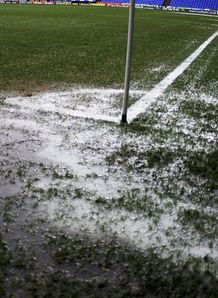
The weather can always make for an interesting game of football. Arguably the best moment of the season so far happened at Gigg Lane on Saturday when Danny Nardiello's shot for Bury beat Notts County goalkeeper Kasper Schmeichel but stuck on the goal-line as it was so wet and muddy. Schmeichel raced back to his line and picked up the ball from the puddle with the grin of a Cheshire cat. The video is well worth a watch on BBC Sport: http://tinyurl.com/yjavct6.

It reminded me of when Southend played Barnsley in The FA Cup third-round almost three years ago. The game had started off normally, but by the second-half it was getting ridiculously wet. However as Southend were 1-0 up, all of the home fans wanted the game to carry on. I don’t think Barnsley fans particularly wanted to come back to Essex again for another try either. The ball was splashing about, managers were checking which players had taken their Pool Frog 2 swimming badge and it was very funny indeed. But in the last minute, a free-kick bounced into the Shrimpers area and was handballed into the net by a Tyke. Replay on a Tuesday night in Yorkshire. Oh dear. At least we won the second game 2-0!
PICTURE: Sky Sports

Monday, 9 November 2009

HOW WOULD YOU SPEND £45m?

We’ll find out tomorrow what the winners of Friday's £90m Euromillions jackpot are going to do with their money. What on earth would you do with £45m? A couple in South Wales and a group of office workers from Liverpool have got that wonderful decision ahead of them. As has been widely reported in the media, £45m is a similar fortune to that of footballer Michael Owen or DJ Chris Evans - both of whom have worked very hard to achieve that wealth. I would feel a little bit guilty if someone handed me a cheque for £45m after I’d bought a £1 ticket and so many others had lost, but I’m sure I wouldn’t mind that much. ‘If you don’t buy a ticket’, as they say...

So would £45m bring me happiness? I might give £5m to Southend United - they need it more than most, despite thankfully avoiding administration today - and probably £5m to my church. Maybe a nice pad in central London and Ferrari will set me back another £5m. I’m dreaming now, but there’s still £30m left. I might give mum and dad a few quid too! But although I would never have to work again, I don’t think I’d want to sit around all day doing nothing. Journalism and the media is where I want to be - whatever happens. And I don’t even play the lottery.

You often hear stories about lottery winners who want to carry on working, and it’s that sense of career fulfilment and a wish to make the most of life that would keep me going. Angela Kelly, who won £35m in August said: “My win has enabled me to bring a great deal of happiness to my friends and family, which has in turn made me very happy.” She’s probably right. By giving your money to other people - and spending a bit on yourself whilst trying to continue your normal life - you will get the most satisfaction from a lottery win. An interesting thought for the day indeed...

* * *

It’s usually the little things that get blown out of proportion which make the headlines in politics. The Sun has recently been a watchdog for the government - even more so since it switched allegiance from Labour to Tory - and today’s revelation that Gordon Brown misspelled the name of a soldier killed in Afghanistan is a good story for the paper. Jamie Janes [pictured, MOD] - not ‘James’ as the PM referred to him both in Parliament last month and in the letter to his mother - was killed in October. His mother, Jacqui, claims the letter was a ‘hastily scrawled insult’, which doesn’t consider that the PM’s eyesight is poor and he writes with a black felt-tip pen to help him see. But he should not be making spelling mistakes - especially on the lad’s name.

The mother has said it was "disrespectful" and an "insult" to her son, but as Business Secretary Lord Mandelson pointed out today, it’s ridiculous to suggest Mr Brown intended to show any disrespect to the boy or his family. It was simply a mistake and I agree with Lord Mandelson. The PM has lots of important things to do with his time, and whilst it’s good that he writes to bereaved families, he does have a country to run too. This should not be blown out of proportion - yes, a soldier has died, and everyone is grateful for the sacrifice he has made for us, but Mr Brown made a few spelling mistakes and suddenly there seems to be a witch-hunt against him. The BBC’s political editor, Nick Robinson, put it perfectly: “The reason this is a story is because of the widespread sense of doubt about the continued value of British forces fighting and dying in Afghanistan.” It’s nothing to do with Gordon Brown’s spelling and handwriting at all.

* * *

On the subject of war remembrance, I was at Hillsborough on Saturday to watch Sheffield Wednesday v Queens Park Rangers, where a one-minute silence was immaculately observed. It’s quite surreal to be high-up in such a massive stadium when everything falls silent [see Anfield, pictured]. This is why I think we should have silences for all remembrance - whether it be for a former player or club director, or anyone else significant. I have a bit of an issue with ‘a minute’s applause’ because I don’t think it’s as powerful as silence.

Football grounds are noisy places during games at the quietest of times, so it’s much more poignant to absorb a lack of noise before a game. The recent Bobby Robson tributes were comprised of a minute’s applause - and some fans even chanted ‘There’s only one Bobby Robson’. Whilst this was obviously not meant to be disrespectful to the legendary man, I just feel the recent obsession with applause and chanting for one minute is not the right way to remember people. An observed silence is the best tribute.

* * *

What on earth is Nottingham Forest's safety officer Alan Bexon thinking? His idea is that home and away fans can sit together in the family stand at their home game with Doncaster Rovers on November 28 at the City Ground [pictured]. Mr Bexon said: “We sincerely hope the idea will catch on and lead to us eventually getting back to a situation where there is no need to segregate fans. Football has evolved since the days when hooliganism was at a peak and we believe the initiative could be a step in a very positive direction.”

Now it’s certainly true that football has moved on since the troubled days of the 1970s and 1980s, but putting home and away fans in different areas is surely a no-brainer. I love going to away matches with Southend and Newcastle because you get some great banter - as I mentioned on the blog last week - and it’s what helps make football special. The idea that one day we would never have segregation is unbelievable - not because it will never be safe enough, but because fans value being amongst their own. It’s their community and family - and they don’t always like the neighbours.