Monday, 2 November 2009

DRUGS PANEL: CONTAINS TRACES OF NUTT

I remember waking up one morning last week to the radio, as you do, and finding it rather strange to hear that an expert would claim ecstasy and LSD are less harmful than tobacco or alcohol. I thought common sense would say otherwise. But I never imagined the furore that has come out of the episode, which has seen the chairman and two members of the government’s drug advisory body leave over the last few days. More could follow shortly.

The question now is whether this is another issue of freedom of speech - following the recent mass hysteria around the Trafigura super-injunction - or if Professor David Nutt should have known better than to say such a thing. Home secretary Alan Johnston has clearly stated why Professor Nutt had to go - “not for his views” but “because he cannot be both a government adviser and a campaigner against government policy”. This is an interesting concept. Should the government hire somebody to advise but then fire them when they question their policy?

Let’s look at Sir Alan Sugar. If he was to state that the government should think again on some of their employment and training policies, I doubt he would suddenly be kicked out as their business adviser. It’s important that people with opinions are allowed space to give those opinions, as freedom of speech is a staple part of our society. If the government don’t like those opinions, then they should sit down with advisers to find out more about why they think such things. The answer is most certainly not just to get rid of them, even if they do disagree with government policy.

* * *

I love radio. I wake up and work to Classic FM, I listen to BBC 1Xtra, BBC Radio One and Kiss 100 when I’m out and about, I tune into BBC Radio Five Live or BBC Essex for football commentary and I download a variety of podcasts from BBC Radio Four. Radio is such a fantastic addition to daily life as it’s entertaining and it's the only media where you can do something else whilst consuming it. Newspapers, magazines, television and websites require your time but radio doesn’t.
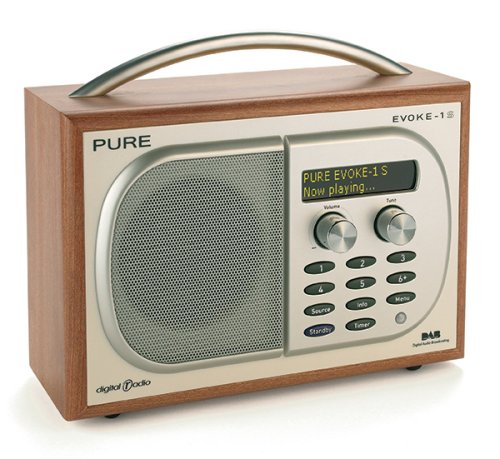
I’m a big champion of DAB Digital Radio, and have watched its development (or lack of) with great interest over the last few years. I own a personal and portable DAB radio - which cost around £150 combined around 3/4 years ago - and they were superb investments. It means I can listen to London stations in Sheffield, access extra BBC content not available on analogue and get fantastic music quality down my eardrums. I rarely look at the scrolling text function, but have occasionally used it for song titles. But, similar to when you go back to analogue TV after trying Sky HD, there is a huge difference in output.

The concern now is that although millions of people are still tuning into radio, last week’s Rajar figures suggest only 21 per cent of us use digital - less than a third of the 66 per cent who listen to AM or FM. I still think the major problem with DAB is that it is not yet widespread in cars - a location where much radio listening takes place. Additionally, the signal is pretty poor in some areas - for example, I never use my DAB radio on the train because the signal is always going in and out, and it’s not worth the hassle. So that’s two things for Ofcom to address - getting it into cars and increasing coverage. Oh, and while you’re at it, why can I only get two bars of mobile phone signal in my room in Sheffield but perfect DAB? I suppose both would just be greedy.

* * *

When is a chant not allowed in a football ground? Alex Ferguson is appealing to Manchester United fans in an open letter for them to stop singing “sit down you p*****phile” to Arsenal manager Arsene Wenger. A few weeks ago we had the latter say Birmingham City fans who chanted “There’s only one Martin Taylor” (in reference to the defender who broke the leg and ankle of Arsenal’s Eduardo) were “stupid”. So where do you draw the line? I go to many football matches every season - it’ll be 20 already for 2009/2010 after Sheffield United v Newcastle United this evening - and often get involved in chants against the opposition or their fans.

I think it’s part and parcel of the game that you’re going to get some friendly abuse between fans. It's in the nature of football, from my experience. Whether it’s fans waving £20 notes at Southend, singing “you’re not famous anymore” to Newcastle or “where’s your Beattie gone?” to Sheffield United - you’ve got expect a bit of banter. But calling someone a “p*****phile” without any evidence or laughing about a player whose ankle fell out of their leg a year ago isn’t so funny. I’ve been in crowds before where I haven’t joined in with one of two chants as they’ve been a bit near the mark. But the majority of it is all right. I just hope that Manchester United can set down a precedent here that the majority of chanting is OK - but a small percentage is most certainly not.

P.S. By the way, Sheffield United v Newcastle United tonight will be the first time I’ve ever see two of the teams I support playing each other. However, I will be in the away end as I’m a bigger fan of the Magpies!

Monday, 26 October 2009

A STRIKE TOO MANY?

The amount of strikes on recently makes me think we’re either living in a the Thatcher era or, indeed, France. Please may I send a letter home? No you’ll have to wait because some people aren’t happy with their pay, conditions and modernisation. Please may I take the London Underground? No, you’ll have to walk because some workers aren’t happy with job losses, pay and disciplinary issues. Please may I fly with British Airways? No, there’s some cost-cutting measures that cabin crews have to sort out, so there might be a strike on there soon as well.

I’d like to point out that I am in a trade union - the National Union of Journalists (NUJ) - and regularly attend meetings so have a good idea of how unions operate and how strike action is considered. I don’t doubt that it’s a last resort for most workers, but my problem is that the consequences are often not properly thought through. If the post doesn’t operate, millions of people and businesses are affected despite having done nothing wrong. If the trains don’t run, millions of commuters and their companies are affected despite having done nothing wrong. Of course, this means unions are in a good position because they can impact more people than just themselves and their own company. But that doesn’t necessarily make it right.

I mentioned the NUJ, and there are often strikes at newspapers - I regularly read about them. If a local paper doesn’t run for one day - or operates at a lower capacity - it might mean people can’t read it. But whilst this might affect advertisers and be considered a disservice to the public good, it isn’t going to cause the same sort of problems that mail or transport workers will. From this viewpoint, newspapers are luxury goods whereas mail or transport are essentials. I’m not saying that therefore journalists have more of a right to strike, I’m simply pointing out that they cause less havoc to third parties.

I have no doubt that there are people in this country who do not get paid the right amount for what they do, but do hope this recent rise in strike action is temporary and we might get back to some sense of normality soon. The worst time to strike is during a recession, and the workers know that, but it’s a sure-fire way to seriously annoy your customers. Hopefully unions and companies can work together to get agreements laid down without the need to stop working.

* * *

When the very existence of your club is in danger, you start to be grateful that it simply exists. Accrington Stanley, Oldham Athletic and Bournemouth have all been there - but to name a few. This week it seems to be the turn of my beloved Southend United. Rumours have been flying around recently that a transfer embargo has been placed on the club since they owe the taxman a big sum of money. It was finally confirmed yesterday and this Wednesday will see the Shrimpers face a winding-up order in the High Court. This could result in administration, and the resulting 10-point deduction would put us bottom of League One, meaning a huge effort would be required just to stay up.

But the £660,000 owed to HM Revenue and Customs is the least of the club’s concerns, with just 12 fit professionals available for this Friday’s game against Gillingham. I was in Carlisle on Saturday with 170 other die-hard Shrimpers to watch us go down 2-1. The lack of substitutes was embarrassing - at half-time there were three players warming-up and two of them were unknown youth-teamers. I’ve been worried about Southend before. In fact, I’ve spent many moments of my life worrying about Southend. But this is different - as I could be without a local football team to support soon. I hope it won’t get to that stage, but the club is clearly in a crisis. Surely there’s an Essex businessman with a bit of spare cash? Ah well, if not, there’s always Newcastle and Sheffield United to follow...

Monday, 19 October 2009

THE LONDON-BOUND GRADUATE TRAIN

It’s quite a crazy thought that I graduate in eight months time and university will be over forever. Hopefully I will find a job though. Anyway, an interesting report was released today by lecturers’ union UCU which shows a “mass migration of graduates to London” who are moving in order to find work. This means that certain areas of the country are lacking in a working age population with a degree because many locals are moving south or towards the capital in search of a better life.

I find this hardly surprising. Almost all of the work experience I’ve ever done has been based in London - and in Leigh-on-Sea, I live a 45-minute train journey from east London, let alone west London. I very much expect that my first job will be in the capital city, and will probably end up living there at some point too. It’s the place to be as a young person - I spent six days out of seven most weeks this summer in London (mostly working in Westminster or going to church in the West End), and love it.

I feel I can only make it big in the media if I work in London, as that is where the headquarters of pretty much all the national newspapers, radio stations and TV channels are located. If I was to live in Sheffield after graduation - which around two-thirds of undergraduate students do - there would be jobs to aim for at a few places such as the Yorkshire Post or BBC Radio Sheffield, but nowhere near the amount of opportunities given to me by London. So this UCU report is spot on, but it does highlight a need for universities in poorer areas to try and hold onto their graduates, as that is one of the only ways in which some regions can improve their proportion of citizens with a degree - by effectively importing them from elsewhere.

* * *

At 32 years of age, Mark Kleinman is a breath of fresh air. The new City editor of Sky News was interviewed in today’s The Guardian and made exceptionally clear what makes a good business reporter. Contacts, contacts and more contacts. Never was a truer word (or phrase) spoken. I’m sure Robert Peston would say the same - and although the BBC’s ‘face of the recession’ is not everyone’s cup of tea, there is no doubt he also has an awesome book of contacts that can give him fantastic exclusive stories - such as the scoop on emergency funding for Northern Rock. You just don’t get that kind of thing from looking through press releases.

Kleinman studied at York University and has worked his way up the ranks at an incredible speed - from Leisure Week to Marketing magazine, the Express to the Times, and now the Telegraph to Sky. He is only 12 years older than me and has already got an editorial position on one of Europe’s biggest news channels. Now that’s impressive. As one former colleague put it: “He’s done so well that you have to be careful of sour grapes.” I think Kleinman is an inspiration to all young and student journalists that by working hard and building up contacts along the way - you can still make it up the ladder. Good on him.

* * *

A beach ball became the first static object since Michael Ricketts to score a goal in a professional football match on Saturday (no offence Michael, but Southend sacked you after a few months for not putting in enough effort). I’ve seen some super goals over the years; for example, the Darlington v Bury own-goal (where a defender tried to clear by an overhead kick but it rebounded off him and into the net) and the various attempts by Liverpool midfielders to chip the goalkeeper from their own half, but the beach ball has to get the nod. It wasn’t even a legal goal, according to quotes for former referees today, but I don’t think that will bother Sunderland or Darren Bent as it gave them a 1-0 win over the Scousers. Make sure you check it out on BBC Sport Online.

Football is indeed a funny old game - and there have been countless moments over the years when I’ve laughed out loud whilst at a game or watching it on TV. Who could ever forget Tes Bramble (brother of Wigan’s Titus) trying out in goal for Southend or Steven Taylor’s fake ‘death’ to stop Aston Villa scoring. It’s moments like that which make football more than 22 men kicking a ball around a pitch. It can often be pure comedy genius.

Monday, 12 October 2009

THE LUXURIES OF STUDENT LIFE?

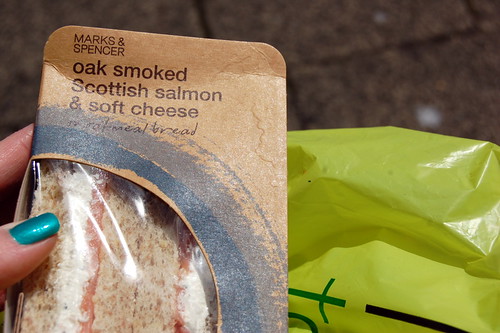
Before I start properly I must say that I’ve never lived in “digs decked out with flat screen televisions” or enjoyed “lunches of smoked salmon sandwiches” whilst at university. But it seems that Kevin Sharpe, Professor of Renaissance Studies at the University of London (Queen Mary), thinks this is the norm for students and believes an upper-class lifestyle is the reason behind students graduating with £20,000 of debt on average. He says that most students have “the latest iPods” and spend much time on “mobile calls at peak times”. Well this is hardly unique to a student population, is it? The majority of people I know (although not me) have got an iPod and contract phone - students and professionals - and this is not an indication of “upper-class living” at all in the UK. But maybe this factor isn’t the thing that was most thought-provoking about Professor Sharpe’s research.

I have come to university to get a degree and enjoy myself - hopefully in equal measure! There will only be three few years of my life when I am a student (this will be the last one as far as I know), and I’m determined to have a good time. Whilst this does not mean reckless spending on gadgets and items that I don’t need, it does mean that I will go out for a drink or meal with friends and not worry too much about the cost. This concept of a “luxurious lifestyle” lived by students - according to Professor Sharpe - simply doesn’t exist, and the majority of people I know at university are very careful with their money.

The bottom line is that getting a degree will cost you money and the living & entertainment costs on top of that are not going to be cheap. However, university is such a wonderful experience - and you can get so much financial support anyway from the government and your institution nowadays - that money should not be a concern, as much as you should watch your spending. Very few students do go out and buy M&S sandwiches and live a “luxurious lifestyle” from my experience, so it seems Professor Sharpe needs to go and research a wider sample on my evidence. However it’s certainly interesting research that’s worthy of further study.

* * *

Sky are launching a rival subscription download service to iTunes, where they will get users to pay £7.99 for the download of one album (or 10 songs) per month then unlimited streaming. However there seems to be a better alternative for the consumer. On Spotify, you have a free streaming service with a few adverts inserted here and there - although there are fewer than on the radio. On iTunes you can download an album or 10 songs for a similar price. So far, an equal service when comparing Sky Songs to iTunes and Spotify. But - and here’s the important bit - iTunes is not subscription based so you can buy as little or as much as you like. This makes it a better alternative as you get more choice and purchasing power than with Sky.

I don’t quite know what it is about downloaded music, but I’ve rarely paid money for songs online. I’ve also never downloaded any tunes on sites like Limewire or Kazaa, but do stream them on Spotify and YouTube occasionally. In fact, I have only ever bought one album to download - Insides by Jon Hopkins - and a couple of singles here and there. I hope that I’m not being too old skool by mostly purchasing CDs from HMV, Play, CD Wow and Amazon.

Last week I wanted to buy The Cut-Up Boys’ latest mix album, and although it was cheaper to download I popped down to HMV to pick up a hard copy and then put it into my mp3 player. The experts among you will point out that it would have been easier - and cheaper - to download it straight onto my mp3 player from online, rather than gone out to buy the CD, rip it onto the computer and then download. But there’s something about CDs that makes me still enjoy buying one in a shop, looking at the artwork and putting it on the shelf. I suppose it’s somewhat like buying a hard copy of a newspaper rather than reading it online - I’ve grown up with news and music in tangible forms, and that’s how I most enjoy to consume them both.

* * *

Every true football fan pays good money to see a good game and it’s such a shame when the referee spoils it. There are often matches when some decisions made are so blatantly wrong that everyone in the ground knows it - such as the phantom goal at Watford last season, or the goal that wasn’t at Bristol City recently. It couldn’t have happened to a funnier person than Crystal Palace’s Neil Warnock - what a legend. Anyway, Manchester United manager Sir Alex Ferguson has landed himself in hot water over the last seven days for suggesting referee Alan Wiley was unfit and “needed a rest” in their 2-2 draw with Sunderland. This personally upset Wiley to the extent where he considered quitting the game, according to The Independent today.

I feel managers should have the right to criticise the referee for their performance - although not personally - as long as they get a right of reply. Exactly this situation happened after Swindon Town v Southend United two months ago: Blues manager Steve Tilson said the referee had made a mistake, and he then apologised to the football club for a bad performance after realising that he had indeed made a mistake. This is good professionalism and should be encouraged. It might not change the score but at least the referee was honest - he certainly earned my respect for this. Referees always try their best in football matches, I’ve no doubt about this, but they will make mistakes - and hopefully these even out over a season. Debate between managers and referees should be encouraged after a game, so maybe we could have a few more interviews with officials. I bet it would make post-match reports a lot more fun...

Monday, 5 October 2009

IT'S THE SUN WOT WON IT - AGAIN?

‘It’s The Sun Wot Won It’. So said Britain’s biggest-selling daily newspaper on 11 April 1992 when the Tories unexpectedly won the General Election. For 1997, they changed their traditional right-wing allegiance to support Tony Blair, at a time when the Conservative Party was in disarray. But in a game-changing moment last week following Gordon Brown’s speech at the Labour Party Conference, The Sun backed the Conservatives once again. The headline ‘Labour’s Lost It’ may well sum up the next election when it’s referred to in history books of the future.

The importance of a newspaper, with a reading circulation that compromises of one in every six people in the UK, backing a political party cannot be underestimated, and David Cameron must be absolutely delighted. Foreign secretary David Milliband reminded his party last week: “The earth does revolve around the sun - just not the one that’s printed in Wapping”, but it’s a hammer-blow to Gordon Brown’s chances of remaining as Prime Minister.

* * *

It’s been an exceptionally interesting time for London’s newspaper market recently. The London Evening Standard last week announced it was reducing its 50p price - in fact, that it was dropping its price altogether - and will be circulated for free around the capital. The paper has seen off 14 rivals in its long history - the latest being thelondonpaper which closed 17 days ago - and the London Lite is also likely to close in the near future. It’s another incredible marker of how badly newspapers have been hit by the recession, but the circulation has fallen from almost 450,000 in 2000 to under 130,000 three months ago, so it’s hardly surprising that drastic action was needed.

The proprietor, Alexander Lebedev - who bought a majority stake in the paper in February from Associated Newspapers - has probably had a switch to free in his mind for some time. Emily Bell of The Guardian suggests this is a “last throw of the dice” for the paper, and it’s true that this will only work really well or end in catastrophe. The fact is that when I’ve bought the Standard to read on the way home from work in London, it’s always represented value for money. It used to take me ten minutes on the Tube to read the London Lite and thelondonpaper cover-to-cover, which I was hardly surprised at seeing as I paid nothing for either. My hope is that the quality of journalism produced by the Standard will not be reduced - and that staffing levels will be maintained - but I’m worried for both. I just hope that Russian knows what he’s doing with a piece of London heritage...

* * *

I almost stopped in shock this morning at the newsagent when I saw the banner headline on The Independent, saying: “Was Monty Python actually funny?” I then read John Walsh’s article and was even more infuriated! He suggests: “Goodness, how tired it looks - the pacing is all wrong” and also points out that he was confused when the ‘Funniest Joke in the World’ sketch was never translated from German. Well, Mr Walsh, if you remember, the joke is supposed to kill anyone who hears it which is why it is never translated into English for the viewer! What he criticises as being “comedy of the schoolroom” and “playing foolish japes of figures of authority” is what much comedy programming is all about.

Monty Python celebrates its 40th anniversary today, and although I might not have been around when it first launched, I absolutely love the films and television series. My brother and I are often quoting the best bits word-for-word to each other! You may have seen the BBC documentary ‘Monty Python - Almost the Truth’ on Saturday (if not, check it out on the iPlayer). It was a fantastic hour-long programme that looked at how the Python idea came out and how it was received by the public. However, they neglected to mention the most famous programme proposal that was never aired - a 30-minute show on which the volume would slowly decrease throughout, forcing viewers to turn up the TV sets, and then a big loud noise at the end causing shock around the country. The BBC didn’t like it and it never happened, but this was just another great comedy idea by a bunch of great comedy geniuses. Long live Monty Python.

* * *

I will be very interested to see how many people pay £4.99 in advance to watch Ukraine v England this Saturday (rising to £11.99 on the day). It’s going to be the first-ever England international game to be screened online-only, and provides a very interesting experiment for online viewing. We know that Channel 4 can attract large online audiences of young people for series such as Skins and The Inbetweeners, and we are known as the ‘YouTube’ generation, but this is a live football match we’re talking about here.

Who wants to sit in their room in-front of a PC for 90 minutes watching a webcast which could crash at any time - when you could be down the pub with your mates and a pint of Carling, watching it on a big screen? I certainly won’t be paying to watch it myself. I know that there was no other option after every terrestrial TV channel backed out at the asking price, but I hope this is a one-off. Fortunately it’s a ‘nothing’ game as England are already qualified for World Cup 2010, so I won’t be missing much. All the same, Come On England!

Monday, 28 September 2009

CAPELLO: PRIVATE OR PUBLIC?

Fabio Capello has been a mostly uncontroversial figure since he took over as manager of the England football team. This is in stark contrast to many of the previous incumbents such as Sven, McClaren and Hoddle. The Italian’s workmanlike approach to the job has won him many fans, although his recent privacy case against the News of the World and Daily Mail has caused a bit of a stir in the media world. He received an apology and “substantial” damages (paid as a donation to charity) from both papers after they printed pictures of him on holiday covered in mud with his wife. The interesting thing about this case is that the Press Complaints Commission told newspapers beforehand that the couple were concerned about the presence of photographers whilst on holiday - so therefore printing the photos was “bad manners”, says Stephen Glover in today’s The Independent. But Glover also makes the valid point that it is not illegal to publish photos of public figures taken in a public place.

There have been various privacy cases that have gone through every court twice in this land - I studied many of them as part of my degree last year - and it’s evident that nobody really knows what the press can get away with. We cannot allow a situation where the British press cannot publish pictures of celebrities and well-known people in public places, as that is not an element at the heart of a free media. Yes, Capello’s privacy request was not respected, but the Press Complaints Commission did not give this out as a legally-binding precedent. If he is on holiday, then there is a reasonable expectation of privacy from paparazzi snappers, but the nature of being a football manager is that there are hundreds of thousands of people who want to know about everything you’re doing. Luis Felipe Scolari was quite open about how one of the reasons he didn’t take up the England managerial position was because of the way in which the British media operates - and that his privacy would have been intruded upon. But now Capello is in the hotseat, and is doing a very good job, people want to know about everything he is doing. It’s no surprise and the price of stardom is that the media will follow him everywhere he goes in public. In my opinion, they shouldn’t be stopped from doing this.

* * *

Nominations for The Guardian Student Media Awards 2009 were released today, and I’m pleased to say the paper on which I was News Editor last year has been shortlisted for Newspaper of the Year. Forge Press at the University of Sheffield has had a very successful first year in its new, rebranded form - and it’s exciting what the future holds. There is stiff competition this year in the Newspaper category - the other four finalists being Leeds, Cardiff, York and Imperial - and it’s no surprise that the former two are the only other established universities with Sheffield that run undergraduate journalism courses. Last year’s editor on Forge Press, Ciaran Jones, did a formidably good job in running the show in Sheffield - and I had a great time putting together the news section with fellow Journalism Studies student, Robert Golledge.

Getting involved with the university newspaper is one of the best things I’ve done in Sheffield - it’s a very well-run operation which has taught me many skills that I’m sure will come in handy in the future. You get to meet important people in and around the university, work against deadlines and learn how to organise a team of around 50 journalists. With a circulation of 15,000 it was a big responsibility - and I’m pleased to still be writing content for the paper this year; just not from an editorial position. I’ll also give a special mention to Paul Garbett - another one of my coursemates - who has got his second successive Guardian nomination this year. Well done to him. If you’re at university, or soon to be heading there, try and get involved with student media as it’s a super way to find your feet in journalism.

* * *

I never really realised there was a north/south divide until I came to study in Sheffield. Then I met some people from the north and realised that - even in an often-jokey way - they didn’t really like southerners. Everyone’s favourite football chairman, Ken Bates (Leeds United), thought it would be helpful to add to the debate last week. He said: “Yorkshire people like their own. They don’t like southerners.” Well, that’s wonderful, isn’t it. Leeds United - the club where ‘everyone hates us but we don’t care’ - are not exactly trying their best to make friends, are they? There’s the old ‘dirty northern b******s’ chant directed at clubs north of Watford at southern grounds, but most fans are more concerned about their local rivals - not any old team in a different section of the country.

I don’t think a north/south divide really exists in football as much as it does in other areas of life like housing and finance - in fact, the north-west is this year’s powerhouse for the Premier League (representing 12 of 20 sides if you include the west Midlands). So Mr Bates’ comments were not really called for - even though he was only referencing manager Simon Grayson’s local roots. Why stoke an argument that doesn’t even exist? The old ‘waving the five pound note’ and ‘we pay your benefits’ chants are not directed by Southend fans to most northern teams - it’s usually to the likes of Milwall and Leyton Orient to wind up local rivals. So maybe Mr Bates could think again before generalising the whole of Yorkshire in a single statement. I’m sure there are some people in Sheffield and Leeds who don’t mind the fact I come from Essex!

Monday, 21 September 2009

SHEFFIELD: A MUSICAL MASTERPIECE

Music is a wonderful thing that brings people together, triggers personal emotions or memories and is very good at providing a soundtrack to life. It’s interesting how much impact location has had on some of our best songwriters in this country - and one city of note here is Sheffield. From the Arctic Monkeys [pictured] (“You’re not from New York City, you’re from Rotherham”) to Richard Hawley (“Cold city lights glowing”), the Steel City has been the inspiration for a wide variety of music. I love listening to songs in cities where they started life, such as being on the Tube with The Streets on in my headphones (“my Underground train runs from Mile End to Ealing”) or even The Apprentice soundtrack when in Canary Wharf! It’s great to get a feel of their background and influences.

There is a great mini-feature by Dave Simpson in The Guardian today about music in Sheffield - although he begins by saying: “a city peppered with architectural horrors [is] not an obvious place to write a song about”. This made me think that one of the reasons why we have an exceptionally diverse music scene in this country is because the landscapes and buildings of different areas have different impacts on musicians - no UK city is the same. Another good example of this is the rapper and saxophonist Soweto Kinch, whose album B19: Tales of the Tower Block charted the lives of budding musicians in Birmingham who felt they could not escape from their council flat. Such a wonderfully diverse country gives many musicians an great inspiration for song-writing - and it’s great that Sheffield is a good example of this. From the old steelworks to football grounds, and Park Hill Flats to Broomhill mansions, it's a very useful source of lyrics.

* * *

It’s not often that Facebook is blamed for suicide, but that’s exactly what happened after a tragic case recently. The parents of one schoolgirl have said social networking sites place “huge pressures” on young people. Their 15-year-old daughter, Holly Grogan [pictured in The Times], fell 30ft to her death from a bridge in Gloucestershire last Wednesday. Reports suggest she was consistently bullied on her Facebook wall, and this was a major factor in the girl’s decision to end her life. There is no doubt that Facebook has dramatically changed the way that students and young people interact, as it is a central communication hub that is an incredibly useful tool. But the downside is that if you’re unpopular within certain circles nowadays, you can never escape from bullying online.

A few decades ago, before other technologies such as texting and instant messaging became widespread, if you were being bullied at school your home was a safe refuge. But now it will follow you everywhere - and it seems the shame of being bullied online may have led Holly to take her own life. I don’t think I have ever seen serious bullying on Facebook, but maybe that’s because the majority of my friends are of a university age where this is less widespread anyway than at school. However, the concept of out-of-hours bullying is something that needs to be addressed by the government to avoid more tragic cases like this. My suggestion would be that Facebook - at least in this country - should make it easier for children to say confidentially if they are being bullied online, and then for parents and Facebook to work with schools to eradicate this. It may seem a idea too large to implement, but then again very few people predicted Facebook would ever reach the size it has now become. If the government see online bullying as a serious enough problem, then they will spend the necessary money to reduce - if not, eradicate - it.

* * *

Google is one of those things which almost everyone loves, but at the same time is a little scared of due to its all-encompassing size. Matt Brittin, UK Head of Google, says: “We want to help newspaper publishers but we are a technology partner”. A quarter of their revenues last year went back to people whose websites they are “helping to monitise”, according to Brittin. So even though Google have become incredibly big in just over 10 years, it has also created lots of revenue for media organisations by making it easier to find content. Everyone is well aware that newspapers are looking at alternative ways of making money online, and it’s not Google’s fault that few are yet charging for online content.

The problem comes when claims are made that the corporation is making money out of somebody else’s time and effort. But Google News is an exceptionally useful tool, and I often find exactly what I need by using it’s sophisticated search engine which covers around 25,000 sources. In fact, I probably only look at some newspaper websites - especially local - because Google has picked them up. Trinity Mirror chief executive Sly Bailey doesn’t particularly like Google News - claiming it’s making easy money out of other people’s hard work - but just think for one moment, where would the internet be without Google? Surely in a worse place.

* * *

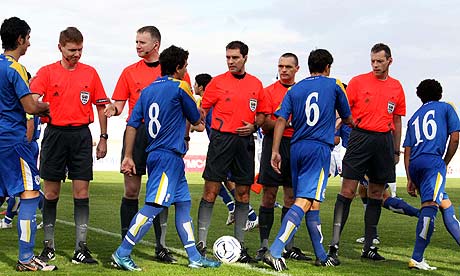
Did anyone watch either Europa League match last Thursday involving Everton or Fulham? For the first time in a match involving professional English sides, there were six officials. Yes, SIX [pictured in The Guardian]. One referee, two linesmen on the wide touchlines, two more linesmen on the end touchline, and a fourth official (or should that be sixth). There was probably a seventh somewhere as well as a backup. How many people do you need to make a decision in a football match?!

This just seems to be another ill-fated experiment by UEFA instead of simply introducing video technology. These new referees are supposed to tell if the ball has crossed the line, but those sort of marginal incidents probably happen every once every ten games or so - and does that really need the investment of another two officials in every game? I think not. Video replays can confirm decisions for certain and should be a much cheaper investment in the long-term anyway. UEFA are just prolonging the inevitable, but until then at least managers have still got something to moan about to journalists.